A Mild Winter That Felt Drier Than It Was
Winter in Dayboro is usually the calm between storms, mild, dry, and full of crisp mornings that clear into sunny days. The numbers show that 2025’s winter followed that pattern almost perfectly:
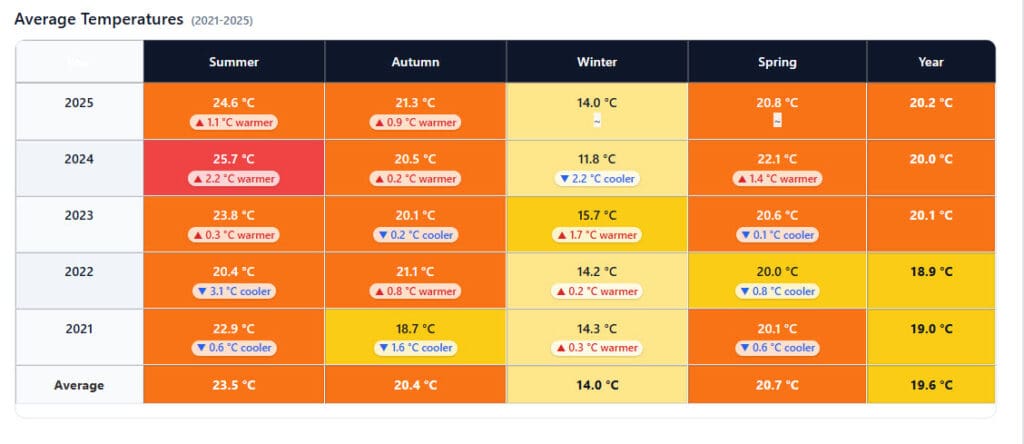
Average temperature: 14.0 °C, exactly the five-year average
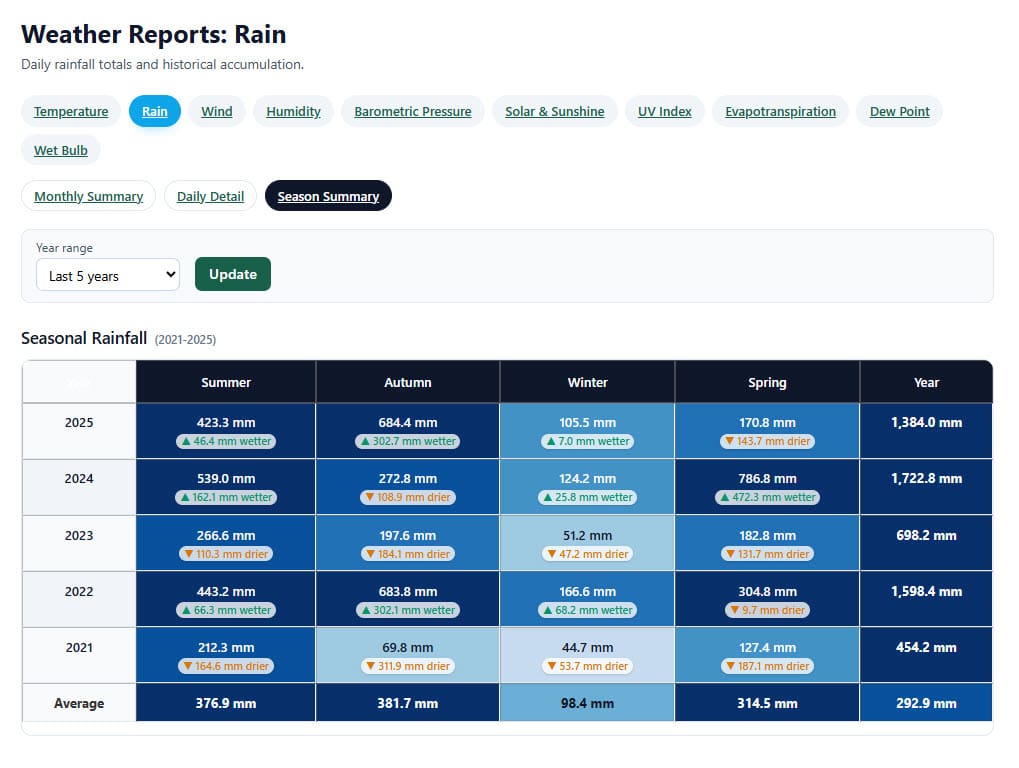
Rainfall: 105.5 mm, around 7 mm wetter than normal
But talk to anyone living on tank water, and you’ll hear a different story, it felt much drier than average. So how can both be true?
Temperatures: The Steady Middle Ground
This winter’s temperatures were right on the long-term average because the bigger climate drivers stayed neutral:
No strong El Niño or La Niña, ocean temperatures were steady, meaning no extremes in rainfall or temperature.
Moderate sea breezes, coastal moisture still reached the valley most afternoons, preventing frost but keeping daytime temps comfortable.
Dayboro’s geography, sitting at 47 m above sea level, the valley traps cool morning air but warms quickly under clear skies.
This balance created a classic “Dayboro winter”, cool nights, mild days, and no unusual cold snaps.
So Why Did It Feel So Dry?
Even though the rain gauge said “average,” how and when the rain fell made a big difference.
Light, short showers instead of solid rain days:
Most rainfall came as brief coastal sprinkles or overnight drizzle, giving just a few millimetres at a time. That helps the grass but doesn’t refill tanks.Dry air and high evaporation:
Despite mild temps, clear skies and low humidity increased evaporation. Water sitting in open tanks or troughs disappeared faster than usual.Uneven local totals:
The D’Aguilar Range often traps moisture on one side and starves the other. Farms and homes on the western slopes or higher ground received far less rain than gauges in the main valley.
In short, it rained just enough to count on paper, but not enough to catch or keep.
The Tank Water Perspective
Many Dayboro homes rely solely on rainwater tanks. When winter showers are spread across dozens of light falls, roof runoff stays low.
A 5 mm shower on a 200 m² roof only gives about 1,000 L of water, barely a day’s supply for a small family.
Without heavy rain bursts, tanks never truly “reset.”
By August, a lot of locals were topping up from tankers or shifting to stricter water habits, even though total rainfall looked healthy in the charts.
What It Meant for Dayboro
Tank water users: Tanks struggled to refill, with long gaps between meaningful rain.
Gardeners: Topsoil dried quickly; shallow-rooted plants needed extra watering.
Farmers: Pastures greened briefly after July showers but browned again by late August.
Creeks: Terrors and Armstrongs ran lightly but steadily, avoiding complete dry-outs.
The Takeaway
Dayboro’s 2025 winter was a perfect example of how averages don’t always tell the full story. Statistically mild and slightly wetter, yet practically, it felt drier because we missed the soaking rain events that fill tanks and revive the soil.
It’s a reminder that in our subtropical valley, when the rain falls matters as much as how much falls.
Stay tuned to Dayboro.au for more local insights that turn raw weather data into something we can all understand, and plan our water, gardens, and days around.
Subscribers can see the full history of data, by going to Weather History Reports page.
Get Dayboro weather delivered to your inbox every morning: forecasts, garden tips, and local updates. Subscribe free →