
CO2 Does Not Drive Global Temperature: What 600 Million Years of Evidence Actually Shows
Abstract
For more than four decades the public story about climate change has been reduced to one claim: rising carbon dioxide (CO2) is warming the planet. It has been repeated so often, by such authoritative institutions, that most people now treat it as established fact. My read of the evidence is that it is not. The geological record, 600 million years of direct evidence from ice cores, ocean sediments and rock formations, does not show CO2 as a reliable driver of global temperature. CO2 and temperature have repeatedly moved in opposite directions. Major glaciations have occurred when CO2 sat ten to twenty times higher than today. CO2 has stayed broadly flat across millions of years while temperatures swung by 5°C or more. In the ice core record, CO2 consistently rises after temperature, not before. A new study published in Nature in March 2026 by Marks-Peterson et al. pushes direct gas measurements back three million years and confirms that CO2 was already near 250 parts per million before Pleistocene glaciation began, and barely moved while the climate shifted dramatically. The forces that actually drive climate, orbital mechanics, solar variability and ocean heat distribution, are well documented and need no assistance from CO2 to explain what the record shows. In this paper I work through the evidence and arrive at a straightforward conclusion: the claim that CO2 controls global temperature is not supported by the geological record.
1. The Claim and the Evidence
1.1 What is actually being claimed
The standard narrative runs like this. CO2 is a greenhouse gas that traps heat. More CO2 means more heat trapped, higher temperatures, cascading climate consequences. Human industrial activity has raised CO2 from roughly 280 parts per million (ppm) before industrialisation to approximately 420 ppm today. That rise is causing dangerous global warming. Reducing CO2 emissions is therefore the central task of climate policy.
This narrative is taught in schools, reported as fact in mainstream media, and forms the scientific basis for Net Zero policies reshaping the economies of Western nations. Trillions of dollars in investment, taxes and energy system restructuring rest on it.
The question I want to ask in this paper is simple. Does the evidence support it?
1.2 What the evidence actually is
The most direct evidence available on the relationship between CO2 and climate is the geological record. That includes:
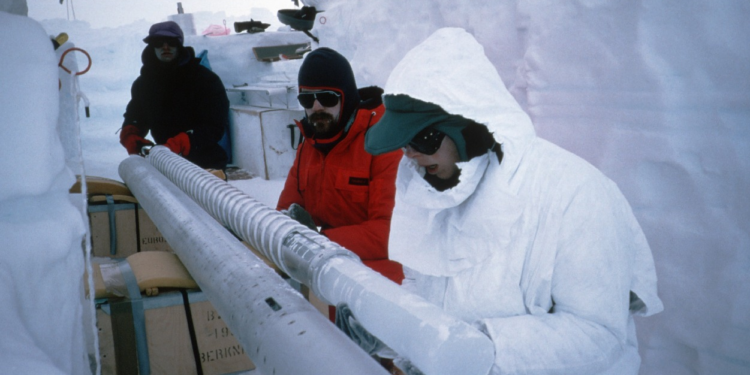
- Ice cores. Drilled from Antarctica and Greenland, containing ancient air bubbles with direct measurements of past atmospheric gases and temperature proxies going back 800,000 years, and now three million years with the Allan Hills blue ice.
- Ocean sediment cores. Containing isotopic and chemical records extending back tens of millions of years.
- Rock formations and proxy data. Carbon isotopes, stomatal indices, boron isotopes providing estimates of atmospheric CO2 back to the dawn of complex life, approximately 600 million years ago.
If CO2 drove global temperature, we would expect a clear and consistent relationship between the two across this record. We do not find one.
What I find insted is a record of repeated mismatches. High CO2 with cold conditions. Stable CO2 with large temperature swings. Temperature changes that precede CO2 changes. Glacial cycles paced precisely by orbital mechanics, with no reference to CO2 at all.
2. The New Allan Hills Evidence
2.1 What Marks-Peterson et al. (2026) measured
The Allan Hills region of East Antarctica contains ancient blue ice forced to the surface by bedrock topography. Marks-Peterson et al. (2026), a team of seventeen US scientists, used this material to measure actual atmospheric gases from up to three million years ago, pushing direct measurement back into the late Pliocene, well beyond the usual 800,000 year ice core record.
Their findings, published in Nature (volume 651, pages 647 to 652):
- CO2 was approximately 250 ppm around 2.7 million years ago.
- CO2 varied by only ~20 ppm across the entire three million year record.
- Methane showed no significant changes across the same period.
- Over this same time, global temperatures fell several degrees as the planet entered Pleistocene glaciation, with interglacial oscillations of 5°C or more.
Lead author Julia Marks-Peterson acknowledged: "We definitely were a bit surprised."
The surprise is understandable. The standard explanation for why the Pleistocene ice ages began rested on a supposed CO2 drawdown from ~400 ppm to ~250 ppm. That drawdown was the claimed mechanism. The CO2 drop cooled the climate into glaciation. Marks-Peterson et al. have shown it did not happen. CO2 was already near 250 ppm before glaciation intensified, and it stayed there for three million years of dramatic climate change.
A companion paper by Shackleton et al. (2026) derived ocean heat content changes from the same ice core record, confirming the thermal signature of these dramatic climate transitions, with no corresponding greenhouse gas signal.
2.2 Why this finding is significant
The CO2 cooling narrative for the Pleistocene is not a minor detail. It was the primary mechanism offered to explain the onset of the most recent series of ice ages. That mechanism has now been directly contradicted by measurement.
Some researchers responded by arguing that the findings show the climate is even more sensitive to small CO2 changes, that even 20 ppm movements can drive 5°C temperature swings. This argument destroys itself. If the climate is so sensitive to CO2 that 20 ppm causes 5°C of change, then three million years of 5°C oscillations with only 20 ppm of CO2 movement is impossible to explain. You cannot argue both that CO2 sensitivty is extreme AND that CO2 was stable during three million years of extreme temperature change. The data directly contradicts the sensitivity argument.
What I take from the data is a climate system that moves in response to other forces entirely, and CO2 is carried along as a passenger.
3. The Ice Core Record: CO2 Follows Temperature
3.1 The sequence matters
The 800,000 year ice core record from Vostok and EPICA Dome C shows CO2 and temperature moving broadly together across glacial and interglacial cycles. That correlation is real. It has been used extensively as evidence that CO2 drives temperature.
The sequence tells a different story. At every glacial termination studied in detail, temperature rises first. CO2 follows, hundreds of years later.
Fischer et al. (1999) examined three glacial terminations and found CO2 rose 80 to 100 ppm after warming, with a lag of 600 ± 400 years. Caillon et al. (2003), using isotopic analysis of argon and nitrogen in Vostok ice cores, confirmed the CO2 lag was 800 ± 200 years at Termination III. The warming happened. Several centuries later, CO2 rose.
The phyical reason is not mysterious. Warming oceans release dissolved CO2. Cold water holds more gas than warm water. As the ocean warms, it outgasses. The CO2 that appears in the ice core record is being expelled by the warming ocean. It did not cause the warming. The warming caused the CO2 rise.
3.2 Correlation was always the wrong story
The visual correlation between CO2 and temperature in ice core graphs has been one of the most effective tools in climate communication. Al Gore made it famous in An Inconvenient Truth. The problem is that correlation, on its own, tells you nothing about what causes what. Two things can move together because one causes the other, because both are caused by a third thing, or simply by coincidence across limited data.
When you examine the sequence, which comes first, the correlation tells you the opposite of the CO2 warming story. Temperature leads. CO2 follows. This is not a fringe finding. It is documented in the primary literature (Fischer et al., 1999; Caillon et al., 2003; Shackleton, 2000) and has never been successfully overturned.
Shakun et al. (2012) argued that while Antarctic temperature locally precedes CO2, globally averaged temperature does not show a clear lead over CO2. I acknowledge that finding. Shakun et al. themselves confirm that the initiating trigger was orbital forcing, not CO2. The CO2 rise in their reconstruction was still an effect of warming oceans, not an independent cause. CO2 may have amplified the warming once released, but it did not start it. If CO2 cannot start a climate shift, calling it the primary driver of climate is not supported.
4. Six Hundred Million Years of Mismatches
4.1 The Ordovician glaciation
Approximately 450 million years ago, during the Late Ordovician, Earth experienced one of the most severe glaciations in its history. Ice sheets spread to tropical latitudes. Vast amounts of seawater were locked into ice. Sea levels fell dramatically.
At the same time, proxy reconstructions of the atmosphere, using carbon isotopes, weathering records, and the GEOCARB III model of Berner & Kothavala (2001), indicate atmospheric CO2 was approximately 4,000 to 8,000 ppm. Roughly ten to twenty times today's concentration.
Under the CO2 warming theory, the planet at 4,000 to 8,000 ppm CO2 should have been extremely warm. It was, instead, in a major ice age.
The mainstream response invokes two factors. The Sun was approximately 4 to 5% less luminous in the Ordovician, and the supercontinent Gondwana was positioned over the South Pole. These are real factors. They partially address the paradox. The arithmetic does not close. Crowley & Baum (1995) modelled Ordovician climate conditions and found that even accounting for reduced solar output, CO2 at 4,500 ppm should have produced warm conditions inconsistent with the observed glaciation. The Ordovician glaciation occurred despite CO2 levels that should, on current theories, have prevented it.
My read of this is that it is the most powerful single data point against CO2 as the primary driver of global temperature. If CO2 cannot prevent a major glaciation at 4,000 ppm, ten times today's level, then the claim that CO2 is currently the dominant control on climate requires extraordianry justification.
4.2 The broader Phanerozoic record
Berner & Kothavala's (2001) GEOCARB III reconstruction covers 570 million years of atmospheric CO2. The record shows large CO2 variability across geological time, sometimes rising to 7,000 ppm or more, sometimes falling near or below today's levels.
Over this record, the correspondence between CO2 and temperature is loose at best. The Carboniferous to Permian glaciation (~300 million years ago) did coincide with low CO2, consistent with a CO2 climate link. The Jurassic and Cretaceous periods showed warm climates with elevated CO2, also consistent with a CO2 contribution. But the Eocene to Oligocene transition cooled dramatically with CO2 levels that were only modestly elevated above pre industrial values.
Zachos et al. (2001), in their 65 million year compilation of climate records, show a general Cenozoic cooling trend. They also show the Palaeocene Eocene Thermal Maximum (PETM), a sharp warming event clearly associated with a large carbon release from volcanism or methane hydrates. This is the mainstream's strongest geological case for CO2 warming. The PETM was a volcanic geological CO2 event of a magnitude, perhaps thousands of gigatons released over thousands of years, that dwarfs anything from human industrial activity, yet it produced warming of 5 to 8°C that reversed within roughly 200,000 years. It does not translate cleanly into a justification for Net Zero policy on a century timescale.
Across the full 600 million year record, what is absent is a tight, consistent, causal relationship between CO2 and temperature. What is present is a climate system that moves dramatically under the influence of multiple competing forces, of which CO2 appears to be one modest contributor among several, and not the dominant one.
5. What Actually Drives Climate: Orbital Mechanics
5.1 The Milankovitch cycles
In 1941, Milutin Milankovitch published his theory that variations in Earth's orbit around the Sun controlled the ice ages. Three orbital cycles affect the distribution of solar energy reaching Earth:
- Eccentricity (~100,000 and ~400,000 years): variation in the shape of Earth's orbit.
- Obliquity (~41,000 years): variation in the tilt of Earth's axis, from 22.1° to 24.5°.
- Precession (~23,000 years): the timing of Earth's closest approach to the Sun relative to the seasons.
Hays, Imbrie & Shackleton (1976), analysing deep sea sediment records, found spectral peaks in the climate record corresponding precisely to these three cycles. Their conclusion: "Changes in the earth's orbital geometry are the fundamental cause of the succession of Quaternary ice ages."
That finding has been confirmed across dozens of independent records over fifty years. The timing, structure, and rhythm of the ice ages match orbital theory. They do not match CO2 changes. CO2 in the ice core record lags the orbital signal. It follows the temperature response to orbital forcing rather than leading it.
The IPCC itself does not contest this. IPCC AR5 states: "There is high confidence that orbital forcing is the primary external driver of glacial cycles." In the IPCC's own framework, CO2 is described as an "internal feedback", not the cause.
5.2 The climate system does not need CO2
Orbital forcing changes the distribution of solar energy across seasons and latitudes. When high latitude Northern Hemisphere summers receive less insolation, ice sheets grow. Once ice sheets grow, ice albedo feedback kicks in. White ice reflects more sunlight than dark ocean, cooling the planet further. Ocean circulation shifts, changing heat distribution. Sea levels fall. The pattern observed in the geological record follows from these mechanisms without any requirement for CO2 to drive the process.
Wehn orbital forcing reverses, Northern Hemisphere summers warm, ice sheets melt, and the oceans release their stored CO2. CO2 rises as a consequence of the warming, not a cause of it. There is no point in the sequence where CO2 needs to be invoked as the driver. The system explains itself without it.
6. Solar Variability and What the Instrumental Record Shows
6.1 The solar connection
Changes in solar output, Total Solar Irradiance (TSI), affect Earth's energy budget directly. The Little Ice Age (roughly 1300 to 1850 AD) coincided with extended periods of low solar activity: the Wolf Minimum, the Spörer Minimum, the Maunder Minimum (1645–1715), and the Dalton Minimum (1790–1830). During these periods, sunspot activity was dramatically reduced, and temperatures across Europe and North America fell measurably.
The recovery from the Little Ice Age, the warming trend that began around 1850 and continued through the 20th century, occurred as solar activity recovered to higher levels. The early 20th century warming (1910 to 1940), which occurred when CO2 levels were still relatively low, is difficult to explain with CO2 forcing but is consistent with solar recovery.
6.2 The 1.1°C is not unusual
Hatton (2026) analysed 420,000 years of EPICA and Vostok ice core data and found that 1.1°C warming per century, comparable to the observed rate of recent warming, occurred in approximately 1 in 6 centuries during the current interglacial (the Holocene, beginning ~20,000 years ago). Looking back 150,000 years, the frequency was 1 in 6 to 1 in 20 centuries. None of those historical 1.1°C/century warmings were caused by industrial CO2.
The current warming rate, real as it is, has precedents in the natural record. It does not require CO2 to explain it.
6.3 The post-1958 correlation
The Keeling Curve shows CO2 rising continuously since 1958. Global temperatures have also risen over this period. That correlation is real and is the strongest contemporary evidence offered for CO2 driven warming.
Correlation does not establish cause, particularly when the timeframe is only 65 years, a blink in geological time. Over the same period, the Pacific Decadal Oscillation shifted positive in 1977, contributing substantially to the warming of the 1980s and 1990s. The Atlantic Multidecadal Oscillation has been in a warm phase since approximately 1995. El Niño events, internally driven ocean atmosphere dynamics, account for a large fraction of year to year and decadal temperature variability.
The isotopic composition of atmospheric CO2 does show the fingerprint of fossil fuel burning. Declining ¹³C/¹²C ratios confirm human industry is responsible for the current CO2 rise. The CO2 rise is real and is human caused. Whether it is causing the observed warming, rather than the warming occurring naturally with CO2 rising alongside it, is not established by the correlation alone. The geological record, covering millions of years of independent CO2 and temperature data, repeatedly shows the two moving independently of each other. Sixty-five years of co movement does not overturn six hunderd million years of divergence.
7. The Greenhouse Effect in Proportion
7.1 What CO2 actually contributes
CO2 absorbs infrared radiation in specific spectral bands. This is laboratory physics, measured by Tyndall in 1859. The question is not whether CO2 absorbs radiation in a laboratory. The question is whether CO2 at atmospheric concentrations, in the real climate system, with real feedbacks and real competing forcings, produces measurable warming at the Earth's surface.
Kiehl & Trenberth (1997) quantified the contributions to Earth's total greenhouse effect: water vapour approximately 50%, clouds approximately 25%, CO2 approximately 19 to 20% (combined with other trace gases). CO2 is a minority contributor to the greenhouse effect even at today's concentrations.
The CO2 absorption bands in the atmosphere are already substantially saturated at current concentrations. The central frequencies of CO2's main absorption band (around 15 microns) have already absorbed most of the available radiation at those wavelengths in the lower atmosphere. Adding more CO2 extends absorption only at the edges of the band, where the effect is progressively smaller. This logarithmic saturation effect means the warming from each additional unit of CO2 is smaller than from teh last. The additional warming from going from 280 ppm to 420 ppm is modest by any physical calculation.
Myhre et al. (1998) estimated the direct radiative forcing from the increase in CO2 since pre industrial times at approximately 1.8 W/m², slightly less than 0.5% of total solar energy input to the Earth's surface. This is a small forcing. The warming projections of 2 to 4°C that drive climate policy do not come from this direct forcing. They come from modelled feedback amplifications, primarily water vapour. Whether those feedbacks are as large as models assume has never been established empirically, and the geological record does not support high feedback values.
7.2 Water vapour does the real work
Water vapour accounts for approximately 50% of Earth's greenhouse effect. It varies enormously, by a factor of forty between tropical oceans and polar deserts. It responds to temperature on a timescale of days. Its concentration is set by surface temperature and atmospheric circulation, not by human activity.
If CO2's small direct forcing triggers a large water vapour amplification, we would expect to see it in the geological record. Periods of rising CO2 should show accelerating warming as the water vapour feedback kicks in. We do not see this pattern. What we see instead is temperature moving to its own rhythm, driven by orbital forcing and ocean circulation, with CO2 rising and falling as a consequence of temperature rather than a cause of it.
8. The Marketing Campaign and the Science
8.1 How the narrative was built
The claim that CO2 is the primary driver of climate change did not emerge from the geological record. It emerged from a combination of theoretical modelling, political institutions, and decades of sustained public messaging that preconditioned audiences to accept it before the evidence was examined.
The IPCC (Intergovernmental Panel on Climate Change) was established in 1988 with a mandate to assess the risk of human induced climate change, not to neutrally assess all possible climate drivers. That framing predetermined its scope. Research into natural climate variability, orbital forcing, solar variability, and ocean dynamics was systematically less funded and less prominently featured than research supporting the CO2 narrative.
The "97% consensus" figure, widely cited as proof of scientific agreement, was derived from studies that defined consensus as agreeing that "humans have some influence on climate", a claim almost no serious scientist disputes. It does not represent agreement that CO2 is the primary driver, that warming will be catastrophic, or that current policies are warranted. The blurring of these distinct claims is, in my read, one of the most effective elements of the communications campaign.
8.2 What settled science actually looks like
Settled science does not require institutional authority to suppress dissent. Gravity works whether you believe in it or not. The orbit of Mercury precesses whether governments fund its study or not. Those things can be measured, predicted, and independently verified.
The CO2 warming claim cannot be independently verified from first principles applied to the geological record. It can only be maintained by:
- Selecting short time windows where CO2 and temperature correlate.
- Treating model outputs as if they were measurements.
- Dismissing geological evidence that contradicts the hypothesis.
- Framing anyone who examines the contradictions as anti science.
That is not how settled science behaves. It is how a hypothesis under pressure behaves.
8.3 The geological record as the arbiter
Science is settled by evidence, not by consensus. The evidence here is 600 million years of climate history. That record shows:
- Major glaciations at CO2 levels ten to twenty times today's, in the Ordovician.
- CO2 stable at 250 ppm across three million years of dramatic temperature change, Marks-Peterson et al. (2026).
- CO2 consistently lagging temperature by 600 to 800 years in ice core terminations, Fischer et al. (1999), Caillon et al. (2003).
- Ice age timing matching orbital mechanics, not CO2 changes, Hays et al. (1976).
- Current warming rates having clear precedents in natural climate variability, Hatton (2026).
None of these findings support CO2 as the primary driver of global temperature. Taken together, they make a compelling case that CO2 is not driving climate in any meaningful sense. The climate moves. CO2 moves with it, sometimes in the same direction, sometimes not. The driver is elsewhere.
9. Limitations
Several genuine uncertainties exist in this analysis and must be stated honestly.
Proxy CO2 estimates for deep geological time carry wide error margins. GEOCARB type reconstructions depend on assumptions about weathering, volcanic degassing, and organic carbon burial that are not fully constrained. CO2 estimates for the Ordovician vary by thousands of ppm between studies.
The cosmic ray and cloud hypothesis (Svensmark & Friis-Christensen, 1997), a physically plausible mechanism by which solar activity modulates cloud cover through ionisation, has been partially tested by the CLOUD experiment at CERN (Kirkby et al., 2011). CLOUD confirmed that cosmic ray ionisation produces aerosol nucleation, but the effect in the lower atmosphere was smaller than Svensmark originally proposed. The solar cosmic ray mechanism may contribute to climate variability but has not been quantitatively confirmed as a dominant driver.
Climate sensitivity to CO2, how much warming results from a doubling of CO2 concentration, is genuinely uncertain. Lewis & Curry (2018), using observational energy balance methods, estimated approximately 1.5 to 1.7°C per doubling. At that level, the warming from current CO2 trajectories is modest and manageable. At the IPCC's central estimate of 3°C, it is more concerning. My read of the geological record is that it is more consistent with the lower estimate.
Attribution of post-1958 temperature change, how much is CO2 and how much is natural variability, is model dependent and not independently verified. The models used for attribution were built with CO2 forcing as their primary mechanism. They cannot be used to prove that CO2 is the primary mechanism without circular reasoning.
10. Conclusion
The CO2 warming narrative has been marketed with extraordinary effectiveness. It has reshaped energy systems, redirected trillions in capital, and become the default explanation for every weather event. It is treated in public discourse as established fact, beyond question.
The geological record does not support it.
Six hundred million years of climate data shows CO2 and temperature moving independently of each other, often in opposite directions. Massive glaciations have occurred at CO2 levels that should, on current theories, have kept the planet warm. CO2 has remained stable for millions of years while temperature swung dramatically. In every ice core termination studied in detail, temperature rises before CO2, not after.
The actual drivers of Earth's climate, orbital mechanics, solar variability, ocean heat distribution, and ice albedo feedback, explain the climate record without any need for CO2 to play a primary role. The IPCC itself acknowledges that orbital forcing, not CO2, is the primary driver of glacial cycles.
The new evidence from Marks-Peterson et al. (2026) makes the contradiction between the CO2 narrative and the geological record impossible to ignore. CO2 was already near today's "safe" level of 250 ppm when the Pleistocene ice ages began, and barely moved as the climate cycled through temperatures 5°C higher and lower over three million years. The supposed mechanism, CO2 drawdown triggering glaciation, did not happen.
CO2 absorbs infrared radiation in a laboratory tube. Whether that translates into meaningful warming of the real climate, at concentrations present in the atmosphere, against the backdrop of orbital mechanics and ocean circulation that demonstrably control climate over geological time, is not a settled question. What I take from the geological record, taken as the fullest and most honest account of how the climate actually behaves, is a clear answer: it does not.
The marketing campaign says CO2 is warming the planet. The evidence says the climate has always changed, is changing now, and will continue to change, driven by forces that have operated for hundreds of millions of years, to which a trace gas accounting for 0.042% of the atmosphere is a passenger, not the driver.
References
Berner, R. A., & Kothavala, Z. (2001). GEOCARB III: A revised model of atmospheric CO2 over Phanerozoic time. American Journal of Science, 301(2), 182–204. https://doi.org/10.2475/ajs.301.2.182
Bereiter, B., Eggleston, S., Schmitt, J., Nehrbass-Ahles, C., Stocker, T. F., Fischer, H., Kipfstuhl, S., & Chappellaz, J. (2015). Revision of the EPICA Dome C CO2 record from 800 to 600 kyr before present. Geophysical Research Letters, 42(2), 542–549. https://doi.org/10.1002/2014GL061957
Caillon, N., Severinghaus, J. P., Jouzel, J., Barnola, J.-M., Kang, J., & Lipenkov, V. Y. (2003). Timing of atmospheric CO2 and Antarctic temperature changes across Termination III. Science, 299(5613), 1728–1731. https://doi.org/10.1126/science.1078758
Crowley, T. J., & Baum, S. K. (1995). Reconciling Late Ordovician (440 Ma) glaciation with very high (14X) CO2 levels. Journal of Geophysical Research: Atmospheres, 100(D1), 1093–1101. https://doi.org/10.1029/94JD02521
Fischer, H., Wahlen, M., Smith, J., Mastroianni, D., & Deck, B. (1999). Ice core records of atmospheric CO2 around the last three glacial terminations. Science, 283(5408), 1712–1714. https://doi.org/10.1126/science.283.5408.1712
Hatton, L. (2026). Is a 1.1°C rise in a century unusual? A study of interglacials in the EPICA-Vostok dataset. Science of Climate Change, 6(1). https://scienceofclimatechange.org/wp-content/uploads/SCC-Vol.6.1-Hatton.pdf
Hays, J. D., Imbrie, J., & Shackleton, N. J. (1976). Variations in the earth's orbit: Pacemaker of the ice ages. Science, 194(4270), 1121–1132. https://doi.org/10.1126/science.194.4270.1121
IPCC. (2013). Climate Change 2013: The Physical Science Basis. Working Group I Contribution to the Fifth Assessment Report. Cambridge University Press.
IPCC. (2021). Climate Change 2021: The Physical Science Basis. Working Group I Contribution to the Sixth Assessment Report. Cambridge University Press.
Kiehl, J. T., & Trenberth, K. E. (1997). Earth's annual global mean energy budget. Bulletin of the American Meteorological Society, 78(2), 197–208. https://doi.org/10.1175/1520-0477(1997)078<0197:EAGMEB>2.0.CO;2
Kirkby, J., Curtius, J., Almeida, J., Dunne, E., Duplissy, J., Ehrhart, S., … & Carslaw, K. S. (2011). Role of sulphuric acid, ammonia and galactic cosmic rays in atmospheric aerosol nucleation. Nature, 476(7361), 429–433. https://doi.org/10.1038/nature10343
Lewis, N., & Curry, J. (2018). The impact of recent forcing and ocean heat uptake data on estimates of climate sensitivity. Journal of Climate, 31(15), 6051–6071. https://doi.org/10.1175/JCLI-D-17-0667.1
Marks-Peterson, J., Shackleton, S., Higgins, J., Severinghaus, J., Yan, Y., Buizert, C., Kalk, M., Beaudette, R., Hishamunda, V., Eves, D., Carter, A., Kurbatov, A., Epifanio, J., Morgan, J., Nesbitt, I., Bender, M., & Brook, E. (2026). Broadly stable atmospheric CO2 and CH4 levels over the past 3 million years. Nature, 651, 647–652. https://doi.org/10.1038/s41586-025-10032-y
Milankovitch, M. (1941). Kanon der Erdbestrahlung und seine Anwendung auf das Eiszeitenproblem [Canon of insolation and the ice age problem]. Royal Serbian Academy.
Myhre, G., Highwood, E. J., Shine, K. P., & Stordal, F. (1998). New estimates of radiative forcing due to well mixed greenhouse gases. Geophysical Research Letters, 25(14), 2715–2718. https://doi.org/10.1029/98GL01908
Petit, J. R., Jouzel, J., Raynaud, D., Barkov, N. I., Barnola, J.-M., Basile, I., Bender, M., Chappellaz, J., Davis, M., Delaygue, G., Delmotte, M., Kotlyakov, V. M., Legrand, M., Lipenkov, V. Y., Lorius, C., Pépin, L., Ritz, C., Saltzman, E., & Stievenard, M. (1999). Climate and atmospheric history of the past 420,000 years from the Vostok ice core, Antarctica. Nature, 399(6735), 429–436. https://doi.org/10.1038/20859
Shackleton, N. J. (2000). The 100,000-year ice-age cycle identified and found to lag temperature, carbon dioxide, and orbital eccentricity. Science, 289(5486), 1897–1902. https://doi.org/10.1126/science.289.5486.1897
Shackleton, S., Hishamunda, V., Yan, Y., Carter, A., Morgan, J., Severinghaus, J., Aarons, S., Marks-Peterson, J., Epifanio, J., Buizert, C., Brook, E., Kurbatov, A., Bender, M. L., & Higgins, J. (2026). Global ocean heat content over the past 3 million years. Nature, 651, 653–657. https://doi.org/10.1038/s41586-026-10116-3
Shakun, J. D., Clark, P. U., He, F., Marcott, S. A., Mix, A. C., Liu, Z., … & Bard, E. (2012). Global warming preceded by increasing carbon dioxide concentrations during the last deglaciation. Science, 338(6104), 58–61. https://doi.org/10.1126/science.1226083
Svensmark, H., & Friis-Christensen, E. (1997). Variation of cosmic ray flux and global cloud coverage: a missing link in solar climate relationships. Journal of Atmospheric and Solar-Terrestrial Physics, 59(11), 1225–1232. https://doi.org/10.1016/S1364-6826(97)00001-1
Zachos, J., Pagani, M., Sloan, L., Thomas, E., & Billups, K. (2001). Trends, rhythms, and aberrations in global climate 65 Ma to present. Science, 292(5517), 686–693. https://doi.org/10.1126/science.1059412
Get Dayboro weather delivered to your inbox every morning: forecasts, garden tips, and local updates. Subscribe free →