
September 2026 in Dayboro: 4.2 mm of rain and the highest pressure we have ever logged

4.2 mm for the whole month, nine days at 30 degrees or hotter and the highest September pressure on our station, confirmed by 32 years of reanalysis data. Two dry Septembers back to back. Here is what the numbers say and what it means for tanks, paddocks and gardens going into October.
Soil moisture now reads the root zone, with a deep reserve line

The soil moisture figure on dayboro.au now comes from the probe at 20 cm, where seedlings and veggies actually drink. The 35 cm probe is still there, reported as the deep reserve.
From lyndhurst-hill.info to dayboro.localbuddy.au: what changed, and what never will

There is a new home for the Dayboro community feed at dayboro.localbuddy.au, and that has caused some confusion. The short version: nothing is going away. The weather stays on dayboro.au, the events stay on dayboro.au, and the Dayboro Lions Business Directory stays the authority on local businesses, hosted free, as it has been since 2017. This is the long version of how we got here.
We Hit 36.9 On Sunday. I Spent Two Days Trying To Prove It Wrong

The station read 36.9 degrees on Sunday afternoon, the hottest September figure it has ever logged. I did not believe it, so I went looking for the fault. A second weather station in Dayboro read exactly the same number, and what I found instead was a real problem in my own record that runs the other way.
The new Dayboro weather live display: put the station on your TV, your phone, or your shop window

There is a new screen at weather.dayboro.au. A full screen live display of the Dayboro station, built for smart TVs, wall tablets and phones. It refreshes itself every minute, flips to a dark theme at night, shows BOM warnings the moment they land, and has an ambient mode that slowly rotates through big glanceable scenes. Free for everyone, with the full forecast set for members, and businesses can have their own branded version.
August 2026 in Dayboro: a record run of 25 degree days and the highest pressure the station has seen.

25.2 mm for the month, eighteen days that reached 25 degrees or better, and the highest mean pressure August has ever logged here. Two short rain pulses interrupted three long dry ridging stretches. Here is what the numbers say, and what an El Nino running very strong plus a wobbling positive Indian Ocean Dipole means for spring.
Bushfire Risk This Spring: What Our Own Data Says and What to Do About It

El Niño and Indian Ocean Dipole conditions mirror the 2019/20 Black Summer setup. Local data shows below-average rainfall. See essential property protection steps.
Division 11 Scorecard: Cr Ellie Smith’s First Year, Checked Against the Minutes
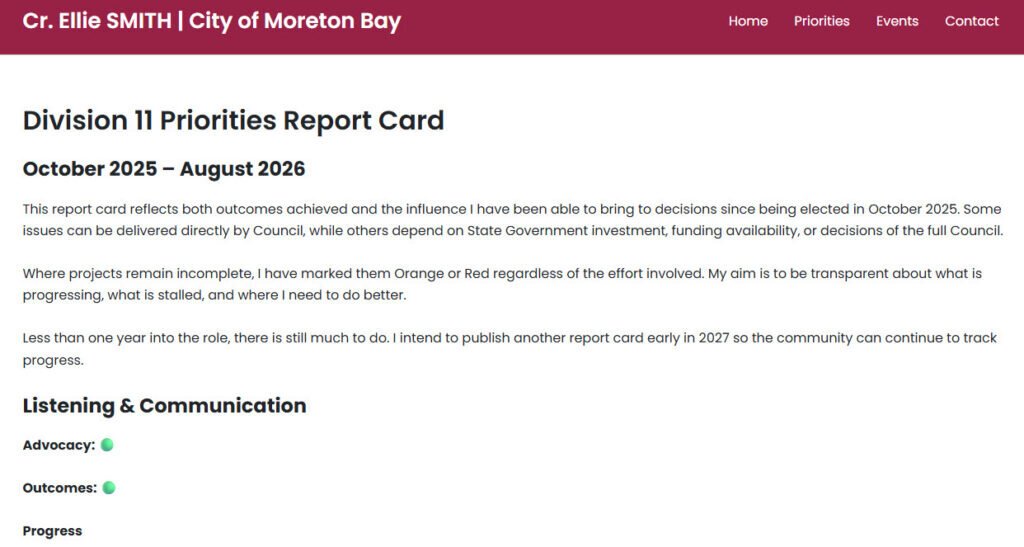
Independent scorecard auditing Cr Ellie Smith’s first year across 8 priority areas. Full attendance proven against official council minutes; outcomes lag advocacy.
The Weather Prophet Over the Range: What I Found When I Tested Inigo Jones

Inigo Jones forecast Queensland seasons from planetary cycles at Crohamhurst, one valley over from us. I rebuilt his method and ran it against 130 years of rainfall, then went back and tested the planets and the sun directly. Here is what I found, and where a fan of the man lands when the numbers come back empty.
July 2026 in Dayboro: the driest July I have on record, and the air was not even dry

July 2026 delivered Dayboro’s driest July on record with 7.8 mm rainfall and record warm days, yet overnight lows stayed remarkably normal despite clear skies.