
Australian Farmers Almanac: January 2026
Your monthly guide to gardening, planting, and farming across all climate zones
Welcome to January 2026
Right, so we're kicking off 2026 and January is shaping up to be a proper scorcher for most of Australia. If you've got a garden (or you're silly enough to have started one), this is the month where things get real. The heat's relentless, the water bills are climbing, and your tomatoes are either thriving or turning into sun-dried versions of themselves.
I've pulled together everything you need to know for January 2026 across all six Australian climate zones. Whether you're in the tropical north getting hammered by monsoons or down in the Mediterranean zone praying for a cool change, there's something here for you.
Climate zones covered: Subtropical Tropical Arid Mediterranean Warm Temperate Cool Temperate

Australian Farmers Almanac: February 2026
Late summer guide with solar eclipse, planting tips, and zone-by-zone breakdown
February 2026 Overview
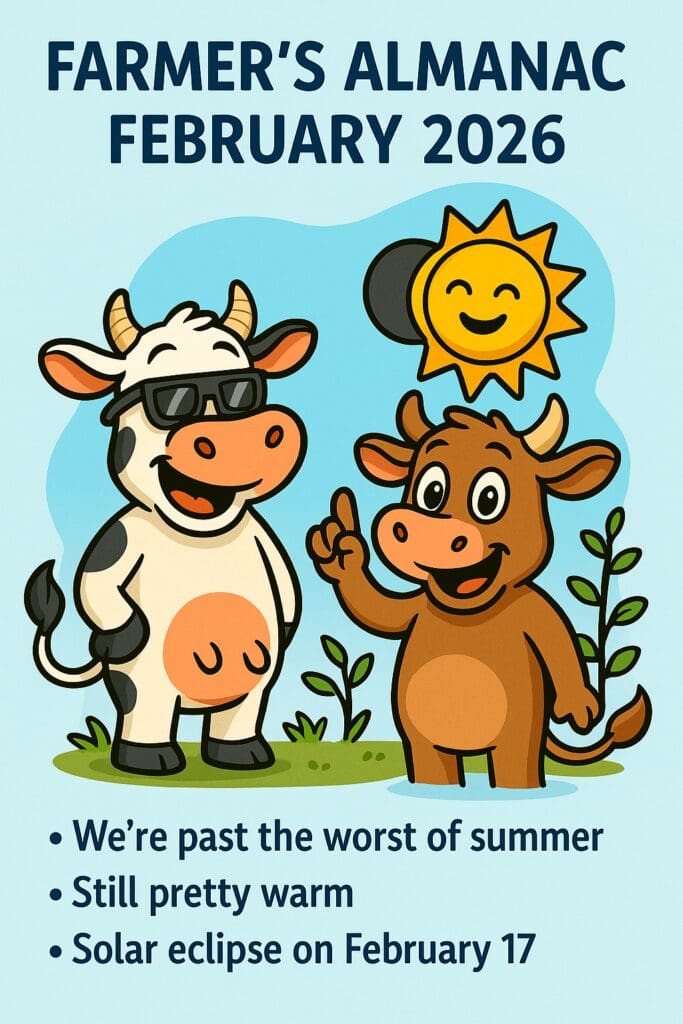
February's arrived, and if you survived January, well done. The good news is we're past the worst of the summer heat for most zones. The bad news? It's still pretty warm, and those of us in the subtropical and tropical zones are getting hammered by the wet season.
This month brings us something a bit special - an annular solar eclipse on February 17. It won't be total for Australia, but we'll get a decent partial view. More on that below.
For the garden, February is transition time. We're starting to think about autumn plantings while still harvesting the last of the summer crops. The monsoon zones are in full swing, and the dry zones are counting down to cooler weather.
Australian Farmers Almanac: March 2026
Autumn begins - prime planting season, lunar eclipse, and the gardener's favourite month
Welcome to March 2026 Early Autumn
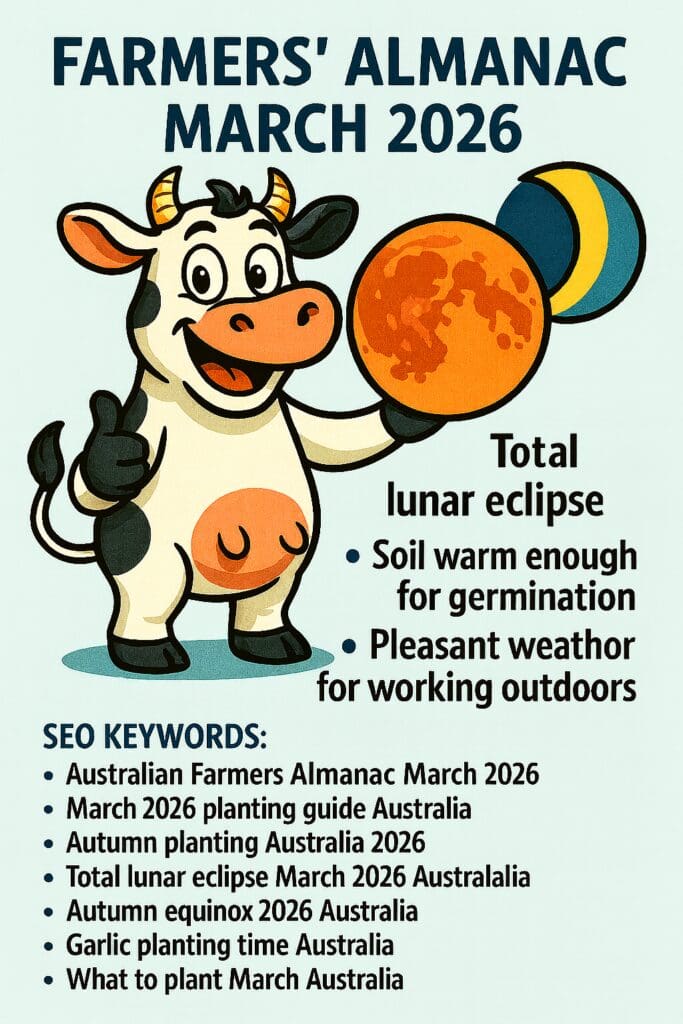
Now we're talking. March is hands-down my favourite month in the garden. The worst of the summer heat is behind us, the soil's still warm enough for germination, and you can actually work outside without melting. This is when serious gardeners get serious.
We've got a spectacular total lunar eclipse on March 3 - fully visible from eastern Australia at a civilised hour. The Autumn Equinox falls on March 20, marking equal day and night. For those following Gann cycles, this is one of the four major dates of the year.
For the garden, this month is prime time. You can plant almost anything for the cool season. Garlic goes in this month in most zones. It's the start of what many call the "second spring" for Australian gardeners.

Australian Farmers Almanac: April 2026
Mid-autumn perfection - ideal planting, bare root trees, and classic garden weather
April 2026 Overview Mid-Autumn
April is what autumn should be. The days are mild, the nights are cool, and your garden is in that sweet spot where nearly everything grows well. If you haven't gotten your cool-season crops in yet, this is your last chance before things slow down for winter.
Big news this month: daylight saving ends on April 5. Clocks go back one hour, so you'll get that extra hour of sleep (or gardening time, depending on your priorities). The Lyrids meteor shower peaks on April 22 with good dark sky viewing.
This is also the start of bare root tree season. If you've been planning to add fruit trees to your block, order them now. They sell out fast and the good varieties go first.
Australian Farmers Almanac: May 2026
Late autumn - blue moon, citrus season begins, winter preparation time
May 2026 Overview Late Autumn
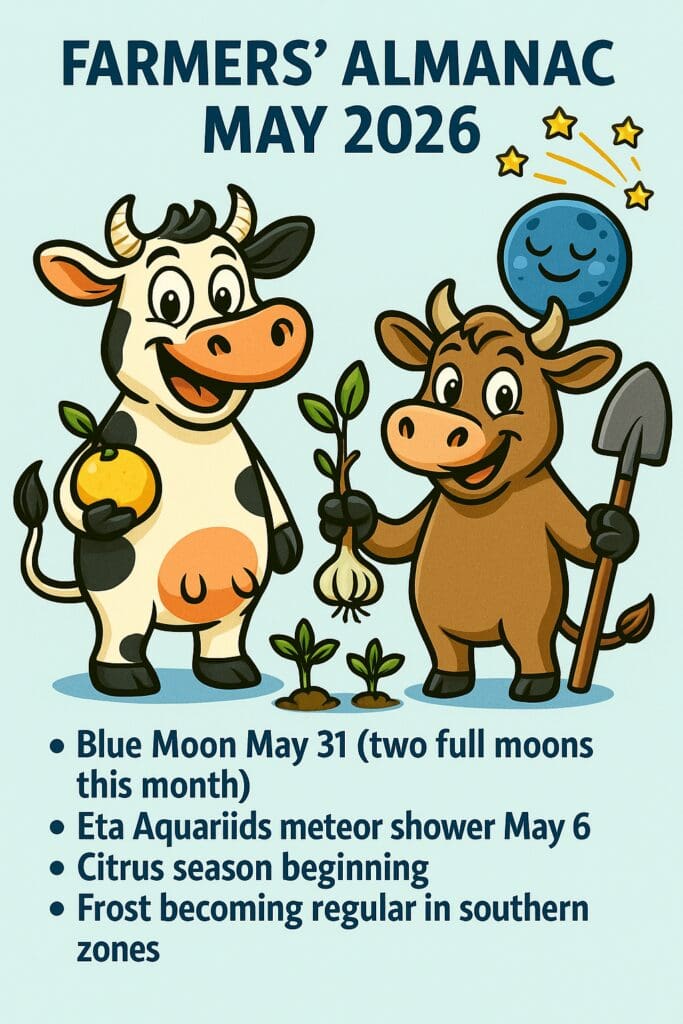
May brings us properly into the cooler months. The morning mists are rolling in, frost is becoming a regular visitor in inland areas, and your citrus trees are starting to colour up beautifully. This is the month where we really transition from the growing season to what some folks call "maintenance mode."
Something special this month - we get two full moons. The second one on May 31 is what they call a Blue Moon. Not actually blue, but rare enough that the old phrase "once in a blue moon" means something.
The Eta Aquariids meteor shower peaks early in the month (May 6), with dust from Halley's Comet giving us up to 50 meteors per hour in dark skies.

Australian Farmers Almanac: June 2026
Winter begins - solstice, citrus abundance, bare root trees, and frost management
June 2026 Overview Early Winter
Winter is officially here. June brings us the Winter Solstice on the 21st - the shortest day of the year and one of the four major turning points in the calendar. After that, the days slowly start getting longer again, even if it doesn't feel like it for a while yet.
For Mediterranean zones, this is peak rainfall season. Your tanks should be filling up nicely. For everyone else, it's about managing frost, harvesting citrus, and planting bare root fruit trees while they're dormant.
This is prime time for bare root fruit trees. Nurseries are stocked, trees are dormant, and you've got all winter for roots to establish before spring growth. If you've been planning to add fruit trees to your property, now's the time.
Australian Farmers Almanac: July 2026
Mid-winter - coldest month, seed starting begins, and the quiet before spring
July 2026 Overview Mid-Winter
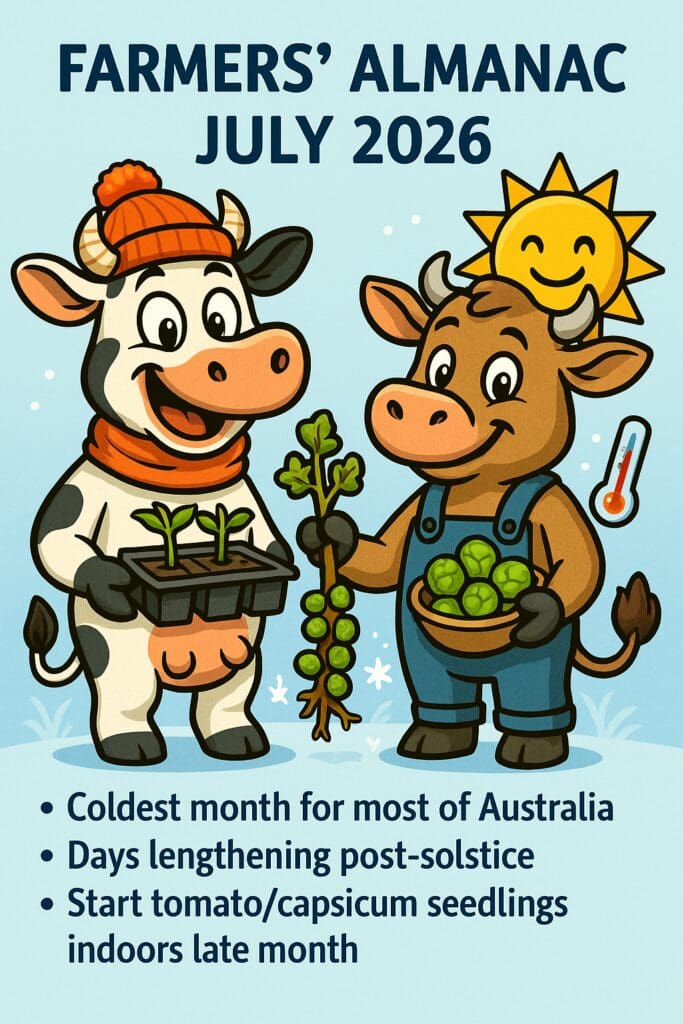
July is typically the coldest month across most of Australia. The days are short, the nights are long and cold, and for many gardeners this feels like the quietest time of year. But there's actually plenty happening if you look closely.
The big news is that day length is increasing again post-solstice. You can feel it by mid-month - those extra few minutes of light in the afternoon. This is when smart gardeners start their spring preparation. Late July is the time to start tomato and capsicum seedlings indoors for those who want an early spring crop.
For livestock, lambing and kidding season is approaching fast. Pregnant ewes and does need extra attention now as they enter late pregnancy. It's also time to prepare lambing paddocks and check all your supplies.
Australian Farmers Almanac: August 2026
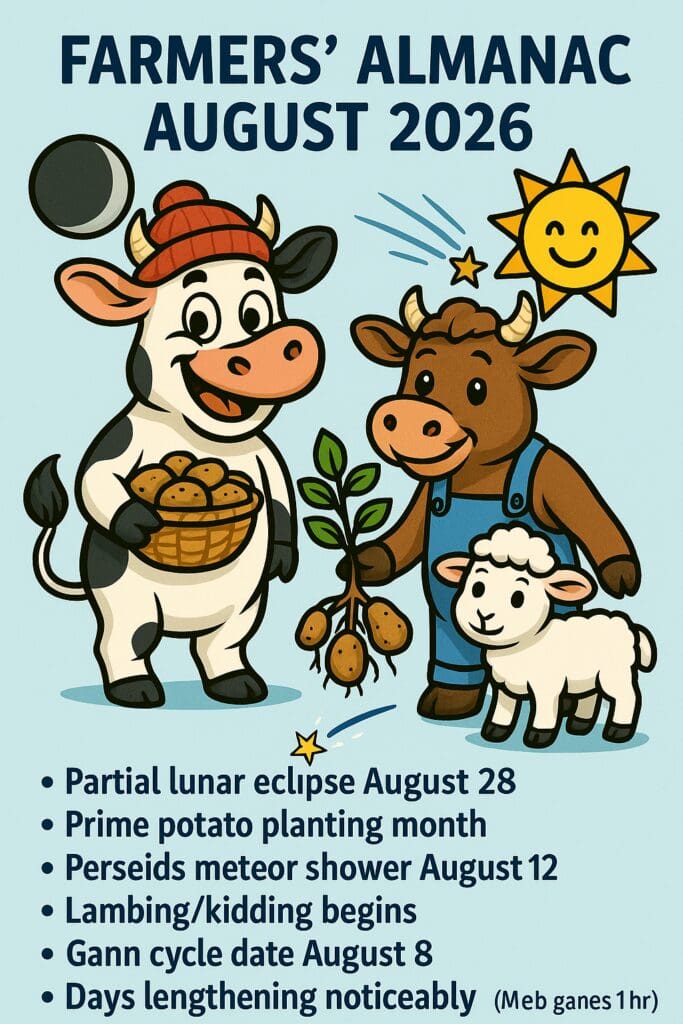
Late winter - spring approaches, lunar eclipse, potatoes go in, lambing begins
August 2026 Overview Late Winter
August is when you can feel spring approaching. The days are noticeably longer, the wattle is starting to bloom, and there's that unmistakable sense that winter's grip is loosening. This is one of the busiest months in the garden calendar - the transition from winter to spring demands attention.
We've got a partial lunar eclipse on August 28 that's visible from Australia. Not as spectacular as March's total eclipse, but still worth watching if you're up. The Perseids meteor shower peaks on August 12, though viewing is better in the northern hemisphere - we see them low on the horizon.
This is prime potato planting month in frost-free areas. It's also when lambing and kidding kicks off in earnest. If you've got pregnant sheep or goats, you're about to get very busy.
Australian Farmers Almanac: September 2026
Spring arrives - equinox, planting bonanza, and the garden comes alive
September 2026 Overview Spring
Spring is here and the garden is waking up. September is hands-down one of the best months for Australian gardeners. The soil is warming, the days are lengthening, and frost risk is diminishing in most areas. This is when all that planning you did in winter pays off.
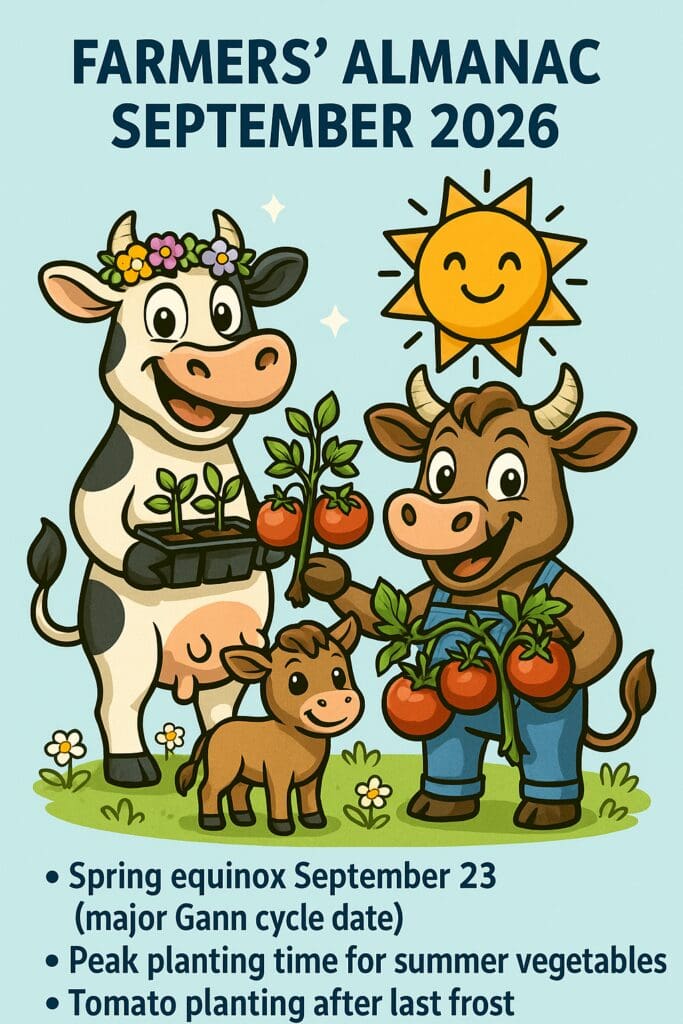
The Spring Equinox falls on September 23, marking equal day and night. It's one of the four major Gann cycle dates and traditionally a powerful time for planting and market shifts. After this, the days become longer than the nights and we're racing toward summer.
Variable weather is the name of the game. You might get a beautiful spring day followed by a late cold snap. Keep frost protection handy for tender seedlings, especially early in the month.
Australian Farmers Almanac: October 2026
Late spring - daylight saving begins, strawberry season, summer approaches
October 2026 Overview Late Spring
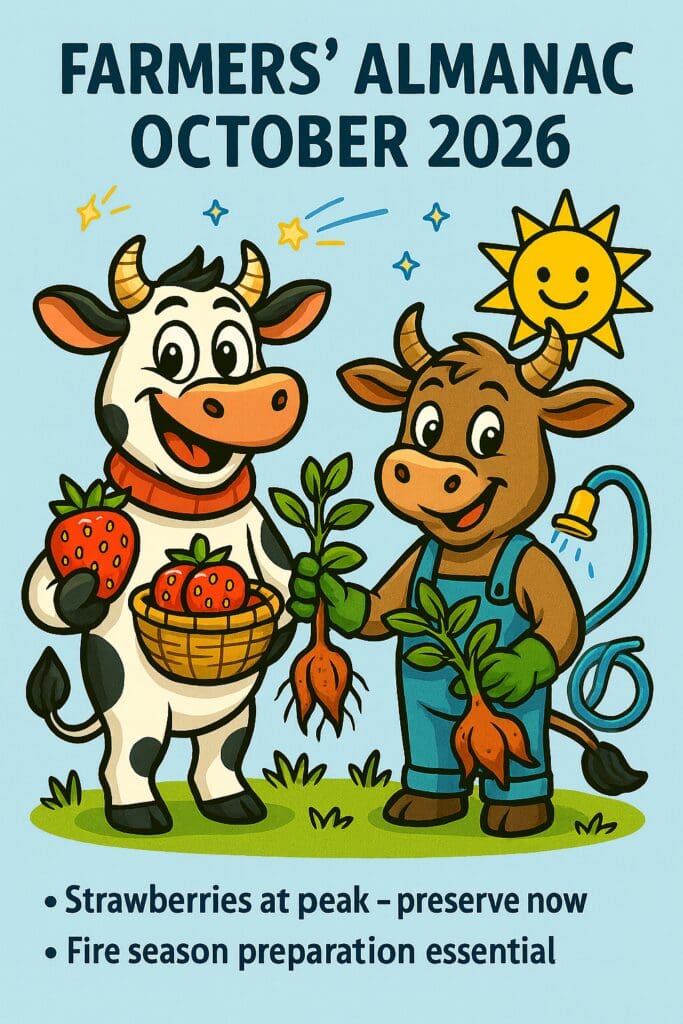
October is when spring really hits its stride. Daylight saving kicks in on the first Sunday (October 4), giving us those long evenings that make after-work gardening possible. The temperature is climbing, the soil is warm, and everything is growing like crazy.
This is also when fire season begins in many areas. If you're in a fire-prone zone, now's the time to do your property preparation. Clear gutters, reduce fuel loads, check your bushfire plan. Don't leave it until December.
Strawberries are at their peak this month. If you've got plants, you're harvesting daily. If not, hit the markets and buy in bulk for jam - prices won't get better than this.
Australian Farmers Almanac: November 2026
Early summer - heat building, harvest begins, fire awareness essential
November 2026 Overview Early Summer
Summer is knocking on the door. November brings the first real heat for most of Australia, and the garden transitions from planting mode to maintenance and harvest mode. The days are long, the evenings are warm, and if you haven't gotten your summer crops in by now, you're running out of time.
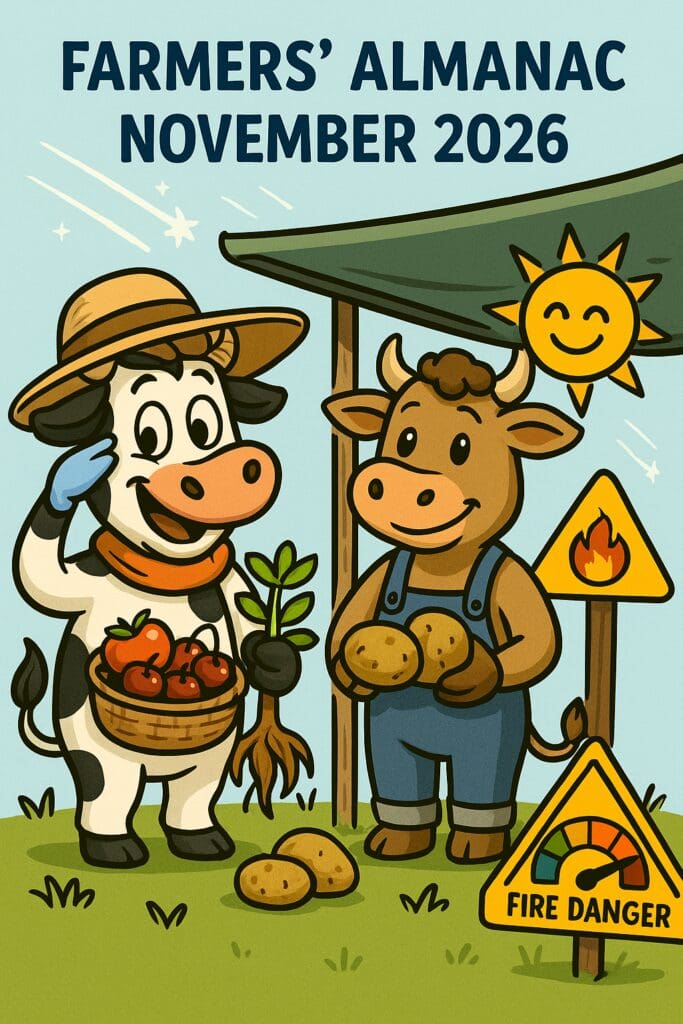
Fire risk is elevated in many areas. Keep an eye on fire danger ratings and have your bushfire plan ready. Don't forget the basics - clear gutters, trim vegetation near buildings, know your trigger to leave.
On a brighter note, summer abundance is starting. Early tomatoes are ripening, strawberries are finishing, and stone fruit is just around the corner. Your preserving equipment should be ready.

Australian Farmers Almanac: December 2026
Summer proper - solstice, stone fruit peak, and Australia's harvest season
December 2026 Overview Summer
December. Summer is officially here. The Christmas rush, the longest days of the year, and for gardeners, a time of both harvest and survival. Stone fruit is at its peak, tomatoes are producing like crazy (if they've survived), and the preserving kitchen is in full swing.
The Summer Solstice falls on December 21 - the longest day of the year and one of the four major Gann cycle dates. From here, the days slowly start getting shorter, though you won't notice for a while yet. The heat is very much still with us.
The Geminids meteor shower on December 14 is the best of the year - up to 150 meteors per hour in good conditions. It's a spectacular show if you can find dark skies away from the Christmas lights.